


Contents
A look back at last season
Barcelona were crowned La Liga champions in 2024/25, wrapping up the title with two games to spare after a 2–0 derby win away at Espanyol on 15 May. Lamine Yamal’s brilliant strike and a late Fermín López goal sealed it on the night, confirming Hansi Flick’s side as champions.
On the final day, 25 May, Barça closed out the campaign with a 3–0 victory at Athletic Club to finish on 88 points. Real Madrid ended second on 84 after a 2–0 win over Real Sociedad at the Bernabéu.
The dramatic climax
Two Clásico wins proved decisive. Barcelona stunned Madrid 4–0 at the Bernabéu in the first half of the season and edged a 4–3 thriller late on, tilting the race their way before clinching the title in Cornellà.
Madrid’s pursuit
Madrid pushed to the end and signed off with an emotional Bernabéu farewell for Carlo Ancelotti and Luka Modrić. Kylian Mbappé struck twice against Real Sociedad to reach 30 league goals in his debut La Liga season.
Atlético and the rest
Atlético Madrid secured third place with a 4–0 away win at Girona on the final day. Villarreal grabbed the last Champions League berth thanks to a statement 3–2 victory over Barcelona a week earlier, while Athletic finished fourth.
Relegation and who comes up
Real Valladolid, UD Las Palmas, and CD Leganés were relegated to LaLiga Hypermotion. Replacing them for 2025/26 are Levante, Elche, and play-off winners Real Oviedo, who sealed a dramatic return to the top flight after 24 years.
Off-season transfers: Who reinforced or reshaped their title push?
Spain’s summer window runs from 1 July to 1 September 2025, and the Big Three have taken three very different routes to contention. Meanwhile, ambitious challengers have moved shrewdly to close the gap. These moves trackable in real time with Sportmonks’ Transfer API set the tactical and statistical baselines our models will use through matchday one and beyond.
Barcelona: Surgical loans, smart registrations, Flick’s imprint
Hansi Flick’s second preseason in charge has come with a tighter, cleaner recruitment plan: Marcus Rashford arrived on a season-long loan from Manchester United, and has already been presented alongside fellow summer additions Joan García (GK) and Roony Bardghji. The club’s focus hasn’t only been on talent, but on registrations: LaLiga’s medical commission cleared Ter Stegen’s long-term injury status, easing the path to register García ahead of the opener. Expect Rashford’s direct running to complement Lamine Yamal’s creativity while Flick tweaks pressing triggers and width profiles.
Real Madrid: Star power plus a defensive rebuild under Xabi
It’s a new dugout and a very different squad backbone. Xabi Alonso has taken over, and the champions-elect narrative is fueled by the long-anticipated arrival of Kylian Mbappé and the headline signing of Trent Alexander-Arnold. Madrid have also overhauled the back line’s future core with Dean Huijsen (from Bournemouth), Álvaro Carreras (from Benfica), and in a youth-to-prime pipeline move of Franco Mastantuono (officially joining on his 18th birthday). Net effect: More ball-progression from fullback, a taller, quicker central unit, and another high-ceiling creator-finisher in the half-spaces.
Atlético de Madrid: A genuine arms race
Diego Simeone has been backed like a contender. Atleti unveiled a six-player core in Álex Baena, Thiago Almada, Johnny Cardoso, Matteo Ruggeri, Dávid Hancko, and Marc Pubill and converted Clément Lenglet and Juan Musso to permanent deals. Then they added a marquee finisher in Giacomo Raspadori. The pattern is clear: Younger legs, better ball retention between the lines, and more goals from secondary runners. If the new pieces click, Atleti’s floor and ceiling both rise.
The best of the rest: Precision upgrades
Real Sociedad have targeted immediate impact on both ends: Gonçalo Guedes (permanent from Wolves) to add direct threat and ball-carrying, and Duje Ćaleta-Car (loan from Lyon with option) for aerial security and build-up stability. Athletic Club, meanwhile, “signed” their biggest win by keeping it: Nico Williams’s contract runs to 2035, a statement that preserves elite wing output in Bilbao and slams shut a key exit route for rivals.
What it means for the models: Barcelona’s ins/outs point to higher transitional speed; Madrid’s arrivals push expected shot quality up while shrinking opponent xThreat from the flanks; Atleti’s volume signings increase depth and rotation flexibility across three competitions. All of it streams into Sportmonks’ pipelines (squads, injuries, registrations, and live form), letting you quantify how each club’s summer reshaped its title odds before a ball is kicked.
What’s at stake this season?
Champions League access and the prize pool
Spain has five Champions League places in 2025/26 thanks to UEFA’s European Performance Spots, earned by Spain’s clubs finishing second in last season’s association coefficient table. That means the top four from La Liga, plus the next-best side (Villarreal last spring), go straight into the league phase. For 2026/27, Spain must again rank among the top two associations this season to keep that fifth berth.
Financially, the Champions League is a step change. Each club in the league phase receives a €18.62m starting fee, €2.1m per win and €700k per draw, with further bonuses for league-phase ranking and knockouts (€11m for reaching the round of 16, rising through to €18.5m for the final and €6.5m for the title). The Europa League and Conference League pay significantly less.
LaLiga’s squad cost limit and player registrations
La Liga’s Squad Cost Limit still governs how much each club can spend on first-team wages, amortisation, and related costs, and it directly affects whether new signings can be registered. The limit is set by the league after reviewing each club’s finances, with clear definitions of eligible costs and a validation process before registrations are approved. This framework will shape how contenders strengthen in January and how quickly summer arrivals can be registered and used.
The role of Sportmonks in La Liga title predictions
Sportmonks is more than a data feed. It is a toolkit you can use to quantify the title race with transparent inputs and repeatable methods. Here is how we structure it for La Liga.
Integrated data pipeline: from real time to context
– Expected goals (xG): Collect chance quality at team and player level through the xG Data API and the Expected endpoints, so you can track whether contenders are creating enough to sustain a title push.
– Line-ups and availability: Pull confirmed line-ups, shapes, and roles, plus premium expected line-ups before kick-off to anticipate selection changes that move probabilities.
– Fixtures, odds and match context: Combine fixtures with pre-match and in-play odds to anchor your models to market signals alongside performance data.
– Transfers and rumours: Track completed deals and scan structured transfer rumours with source links and likelihood ratings, so you can adjust projections when a key move looks close.
Predictions API: machine learning with clear outputs
Use Sportmonks’ Predictions API for probabilities across core markets such as match winner, correct score, over/under, and BTTS. Probabilities are available up to 21 days before kick-off, letting you map the title race well ahead of big fixtures.
Real-time calibration and value detection
xG values are processed through the match with frequent updates, which helps you judge whether a leader’s performance matches results. Layer this with the Value Bet endpoint that flags differences between model probabilities and bookmaker odds.
Why this matters for La Liga modelling
Putting these pieces together means you can:
– Measure whether Barcelona, Real Madrid, or Atlético are running hot or cold versus xG
– React quickly to line-up news that shifts win probabilities
– Add transfers and credible rumours into medium-term projections
– Monitor where market odds and model outputs diverge to stress-test your assumptions.
If you are building from scratch, start at the Football API hub to see endpoints, includes, and examples, then plug in the xG and Predictions modules.
Who are the current favourites to win the La Liga title 2025/26?
The winner market has Real Madrid a shade ahead of Barcelona, with Atlético de Madrid third. Odds are tight enough to feel like a two-horse race with a very live outsider.
Market odds (outright winner)
– Real Madrid: 19/20 (≈51.3% implied before margin)
– Barcelona: 11/10 (≈47.6%)
– Atlético de Madrid: 10/1 (≈9.1%)
Real Madrid
Squad changes & impact
New head coach: Xabi Alonso has taken over, signaling a tactical refresh and high-press tendencies carried over from Leverkusen. realmadrid.com
Signings: Trent Alexander-Arnold (RB) adds elite ball-progression on the right. Dean Huijsen (CB) brings long-term upside to the back line. Álvaro Carreras (LB) deepens the full-back rotation. Franco Mastantuono (AM) is a blue-chip prospect for the medium term. Kylian Mbappé arrived last summer and remains the headline attacker.
Notable departure: Club farewell to Lucas Vázquez, trimming veteran depth at RB/wing.
Impact: Madrid have materially raised their floor in build-up and defensive rotation, while Alonso’s arrival suggests more structured pressing and quicker vertical attacks.
Key players
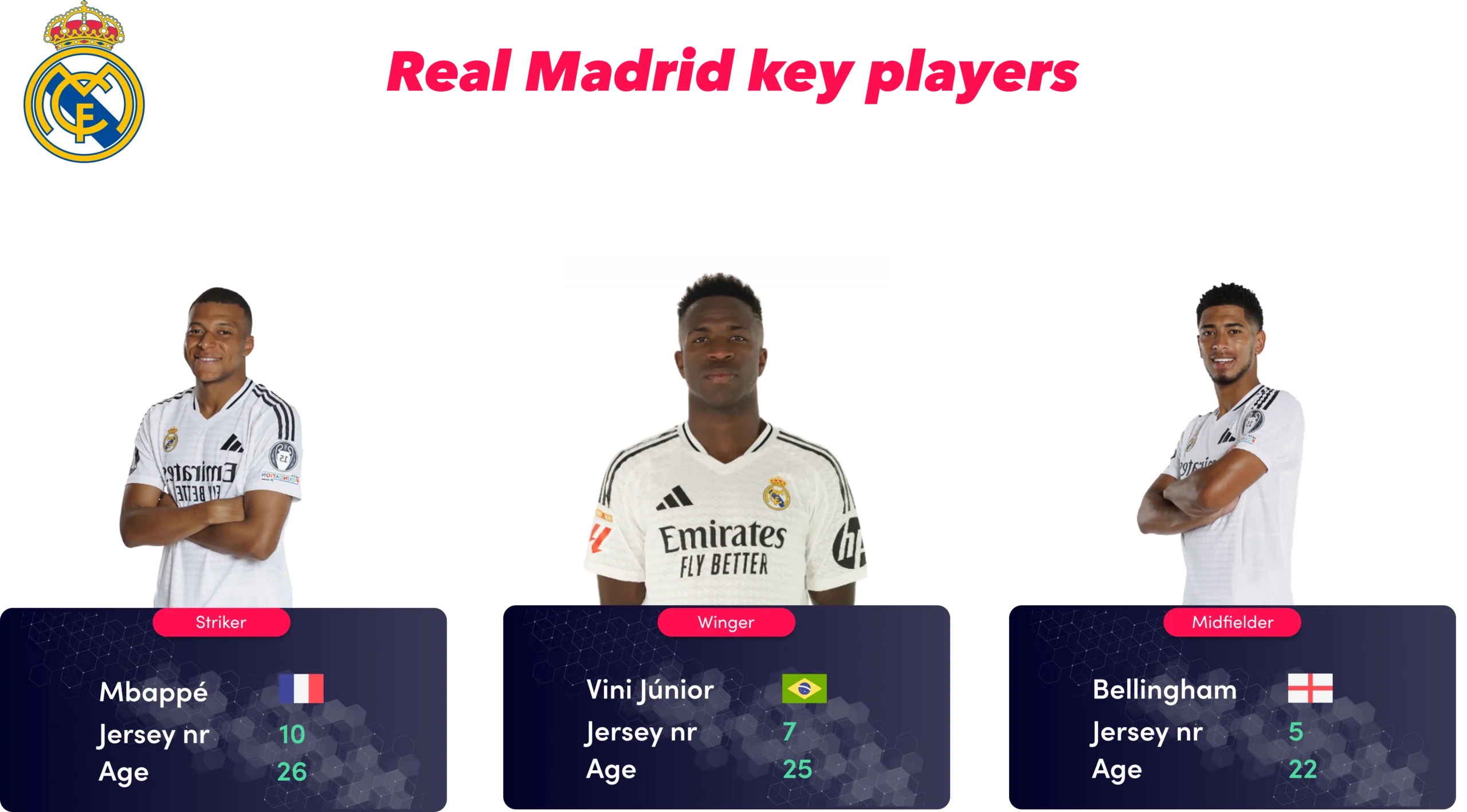
Mbappé, Vinícius Júnior and Jude Bellingham headline the attack; TAA immediately becomes a primary creator from deep/right. (Madrid’s injury picture is in flux heading into MD1, but depth covers early absences.)
Mid-season outlook
Madrid’s squad is built to absorb Champions League load. If chance creation skews wide-heavy early, expect January chatter around an additional No.9 profile to complement Mbappé/Vini though Alonso’s structure could reduce that need.
Why they’re favourites
Bookmakers lean to Madrid thanks to coaching uplift + elite talent density and a fortified back line after TAA/Huijsen/Carreras. With home fixtures staggered into week one, market confidence still holds.
Barcelona
Squad changes & impact
Coach: Hansi Flick continues after an excellent first year, providing continuity of an aggressive, high-tempo model.
Signings/ registrations: Marcus Rashford arrives on loan, adding direct pace and off-ball running. Joan García (GK) signed from Espanyol; registration handled amid LaLiga medical exception processes following ter Stegen’s back surgery and recovery timeline. Wojciech Szczęsny is in the group and extended to 2027, bolstering short-to-midterm depth in goal. Roony Bardghji (RW) adds creativity and 1v1 threat.
Notable departure: Iñigo Martínez leaves, slightly thinning experienced LCB cover.
Impact: Rashford’s verticality changes transition speed; goalkeeper moves stabilise a position affected by injury, while Bardghji fits the youth-first, width-and-creativity profile Flick likes.
Key players
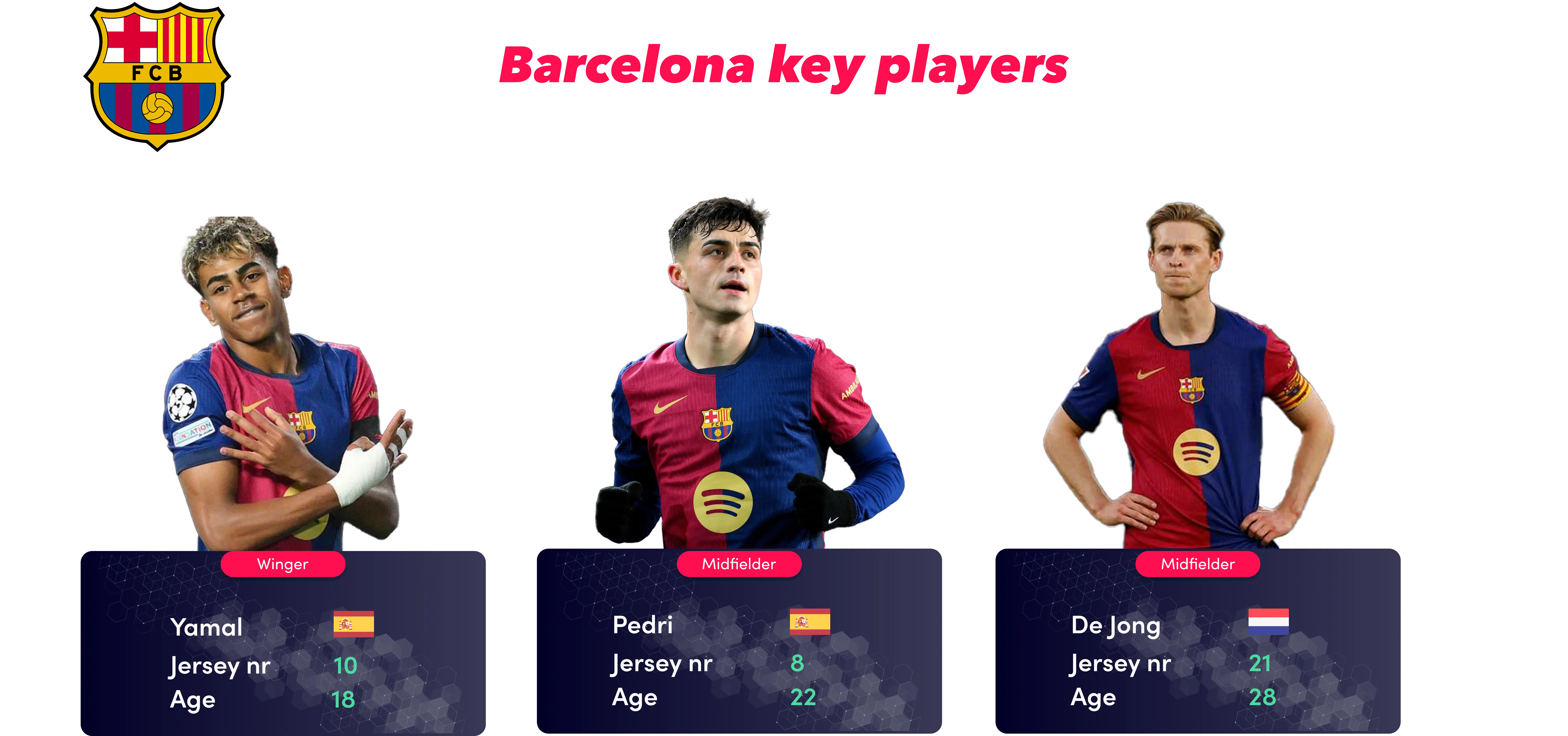
Lamine Yamal and Pedri are the tactical levers between lines; Lewandowski remains a penalty-box reference; Rashford offers direct runs beyond the last line that Flick can weaponise in early fixtures. (Admin/registration watch remains a theme of August.)
Mid-season outlook
If centre-back depth bites (post-Iñigo) or registration delays linger, expect winter market maneuvering for a defender and potential wage-bill shuffling. Otherwise, chance-creation volume under Flick keeps them neck-and-neck with Madrid.
Why they’re favourites
Hansi Flick has been retained as head coach after a successful debut season where he led the team to a domestic treble. His tactics have focused on an intense, high-pressing, and attacking style of play, which has been successful both domestically and in Europe.
Atlético de Madrid
Squad changes & impact
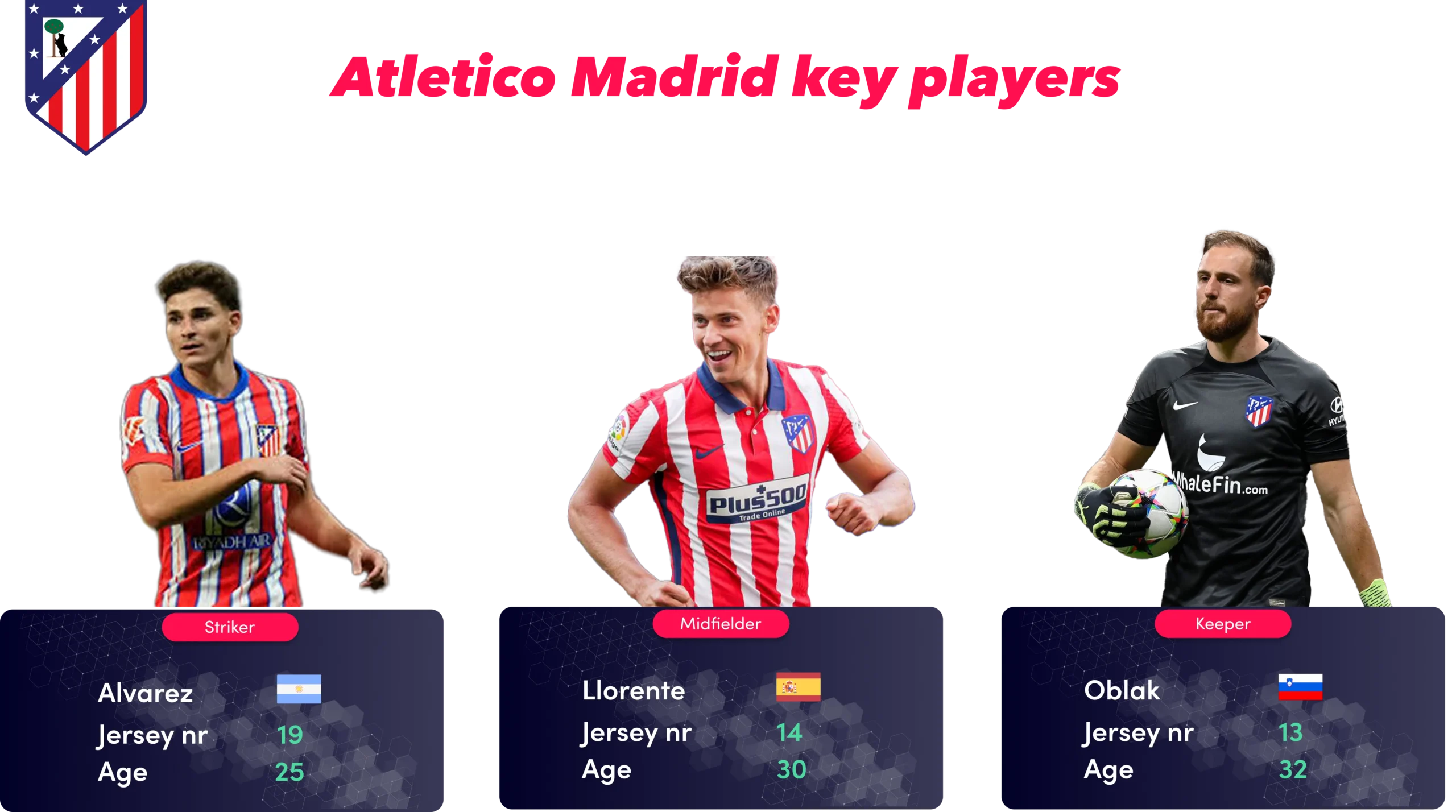
Key arrivals (official): Álex Baena, Thiago Almada, Johnny Cardoso, Matteo Ruggeri, Dávid Hancko, Marc Pubill, plus Giacomo Raspadori up front. That’s a spine-wide refresh with ball-carrying, pressing range and left-side balance.
Renewal: Antoine Griezmann extended to 2027, preserving leadership and link play.
Outgoings: club has trimmed veteran minutes/salary to pivot younger and quicker (e.g., departures/loans of Lemar, Correa, others in the summer window).
Impact: Simeone suddenly has multiple creative ball-carriers (Baena/Almada), a true box striker option (Raspadori), fresh full-back profiles and robust LCB/LB depth (Hancko/Ruggeri). The squad looks built for a higher pressing line without losing set-piece bite.
Key players
Griezmann remains the tactical hub, with Raspadori offering penalty-box movement. Baena/Almada should raise chance creation between lines; Oblak and the new LHS pairing steady the defensive phase.
Mid-season outlook
If chance quality spikes but goals lag, expect January noise around an additional finisher; otherwise, the summer’s breadth of recruitment should carry across league + Europe without the spring drop-off that’s hurt them in recent years.
Why they’re favourites (outsider)
At double-digit prices, Atleti offer the best “price vs. ceiling” play: a deeper, more creative XI with Griezmann extended. If the new core clicks by autumn, the top two’s margin can close fast.
How Sportmonks enhances predictions
xG and advanced stats
Track chance quality and finishing with the xG Data API, including xG, xGoT and xPTS at team and player level, so you can compare results to underlying performance each matchday.
Predictions you can plug into models
Use the Predictions API for probabilities on key markets like match winner, correct score, over/under and BTTS. These modelled outputs are designed to complement your own ratings.
Odds and value detection
Pull pre-match and in-play odds to anchor forecasts to the market, then surface mispriced events with the Value Bet endpoint that mines historical odds movements.
Line-ups and late news
Automate probability updates when team sheets drop using the line-ups and formations guides and includes.
Transfers and rumours with probabilities
Account for squad changes ahead of time using the Transfer Rumours endpoint, which supplies destination clubs, source links and likelihood scores you can convert into scenario weights.
Fixtures context and historical depth
Enrich fixtures with events, stats and line-ups via includes, and train or backtest with historical data going back to 2000 across 2,500+ leagues.
What this delivers: Faster pre-match baselines, live recalibration when news breaks, and a repeatable way to compare market odds to model probabilities across La Liga’s title race.
Dark horses to win La Liga 2025/26
Villarreal (the one genuine dark horse)
There is a credible case for the Yellow Submarine to crash the title race. After sealing a Champions League return last season, Marcelino’s side looked well-organised in pre-season, including a 3–2 win at Arsenal at the Emirates. Recruitment is ongoing to cover long-term defensive injuries (Willy Kambwala and Logan Costa) and to add a forward, with centre-back Santiago Mouriño already through the door. The big caveat is replacing last year’s goals after Alexander Sørloth’s move to Atlético, but the market still prices Villarreal as the best of the rest at roughly 67.0 to win the title, and Opta’s model gives them a small but non-zero shot. Use Sportmonks to watch whether their non-penalty xG and set-piece threat stay top-six calibre through autumn.
Athletic Club (live outside chance)
Athletic are back in the Champions League for the first time in 11 years and kept their star man, with Nico Williams signing through 2035. Continuity under Ernesto Valverde and the San Mamés factor make them awkward for everyone, which is why models rate them as a top-four contender and a long-shot title play. Track their pressing intensity and transition chances with Sportmonks; if they sustain top-five underlying numbers by October, the price will shorten.
Real Sociedad (long shot with pedigree)
La Real remain expertly coached and efficient, but the summer sale of Martín Zubimendi to Arsenal strips out their midfield anchor. Incoming depth like Gonçalo Guedes and a defensive loan for Duje Ćaleta-Car help, yet the market still ranks them behind Villarreal and Athletic in outright prices. They profile as a top-four chaser more than a champion unless a January upgrade lands. Sportmonks’ xG will tell you quickly if the rebuild can keep them in the slipstream of the big three.
Predict La Liga like a pro
From dramatic title races to underdog breakthroughs, the 2025/26 season is shaping up to be unforgettable. With Sportmonks, you get real-time scores, historical data, advanced metrics like xG, and AI-powered forecasts, all in one platform. Whether you’re building a predictive app, managing a fantasy team, or simply want smarter insights, we’ve got you covered.
Tap into Sportmonks’ La liga data and stay one step ahead this season.
Faqs about the La liga